 Publisher: Upper Deck
Summary
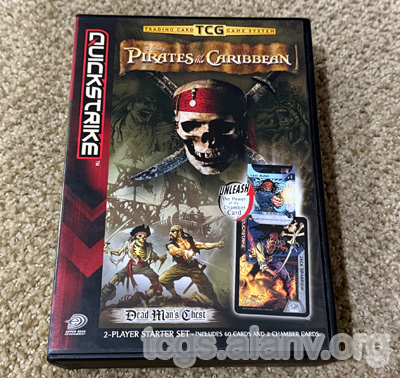
Quickstrike is a card game system by Upper Deck where you control a character and recruit allies to fight each other. The game's big differentiator was "chamber cards", thick cards with an inner card that pulls out for a surprise effect during gameplay, as well as the fact that you do not have a hand of cards.
The game was available in 62-card two-player starter decks (two 30-card decks and two chamber cards), and 10-card boosters (9 cards plus a chamber card).
Card Types
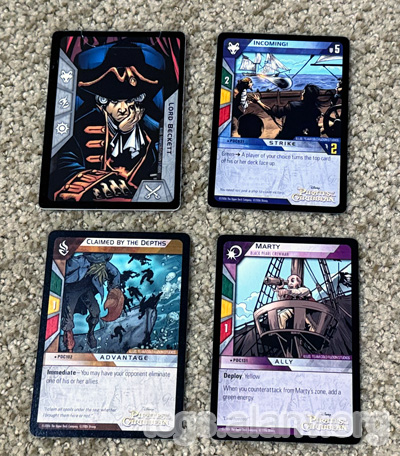
- Chamber - A character you build the deck around. Chamber cards have a "pull out" interior card with a signature move that can be revealed during gameplay for an effect. Cards also have deckbuilding traits.
- Strike - Cards representing attacks. Each has a sidebar energy cost, force (strength), intercept (defense), and effects. They also have a trait for deckbuilding.
- Ally - Cards representing people and creatures that help you out. Each has a sidebar energy cost and an effect.
- Advantage - Cards representing special abilities. Each has a sidebar energy cost and an effect.
Sets and Decks
The game saw a total of two sets released: Avatar: The Last Airbender and Pirates of the Caribbean. There's a Shaman King Trading Card Game that is semi-compatible with the system: The card backs are different, and the cards are not balanced, but the gameplay itself is compatible.
The two sets had starter decks, each of which included two chamber cards and two 30-card decks. Both sets also include extra-rare cards.
Promo cards were also available for the Avatar set, packaged with various toys or from Burger King.
Deck Composition and Contents
Starter Decks
Decks: Blind Boxes
Players: Two
Size: Two (Likely Non-Legal) Half Decks
Rarities: Common, Uncommon, Rare
Rulebook: Included
Playmat: Included
Other Items: Deck Box
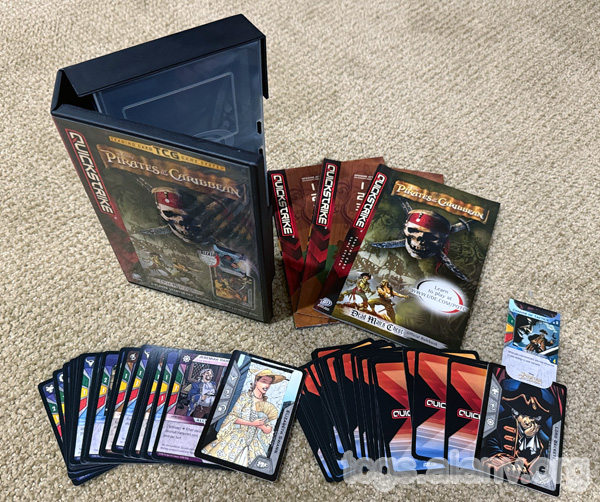
The box includes two 30-card decks (a legal deck is 60 cards) and two chamber cards, allowing two players to immediately play. The decks were fully randomized, and the cards were not selected based on the chamber card, so the deckbuilding traits will likely not match, which would make the deck technically illegal. It would also almost certainly not be possible to build a full legal 60-card deck simply by combining the two half decks.
Each of the two decks included a chamber card, 21 common cards, 1 rare card, and 8 uncommon cards. Ultra rare (gold foiled) cards could be found in starter decks, and replaced a common card if present.
Decks also include a rulebook and two playmats, and come in a UDE deck box.
Deck Rarity Analysis
Just about perfect, since you can get any card (including any rare card, and even an ultra rare) from starters. I wish they had semi-randomized them in a way that makes them legal half decks for the included chamber card, but that's not a huge deal from a starter standpoint.
Alan's Thoughts On The Game
This is one of the most unique card games I've played. And that makes it hard for me to figure out how I feel about it.
First of all, the lack of a hand is extremely unusual. Cards are flipped directly from the deck into play, putting you entirely at the whims of the RNG gods (and how good your deckbuilding was). There are effects that allow you to re-flip, and you can always fail a couple flips without too much penalty by falling back from the green to the yellow to the red zone. But it is still extremely subject to the deck as to whether you'll be able to counter an attack, or just have to take the L.
The chamber card also honestly feels much more like a gimmick than an actual interesting mechanic, and the fact that they say it "revolutionizes trading card gaming" is ridiculous. They could have just as easily (and more cheaply) printed a two-sided hero card (much like World of Warcraft) with a strike on each side, and flipped between them. The guaranteed strike (at the cost of having to charge zones, which is also somewhat RNG-y) is a nice thing to be able to fall back to, but like the deck itself, it's also not terribly reliable.
The deck itself also cycles everything as needed, meaning tying up cards in your discard and energy piles isn't a huge deal, since you're going to shuffle everything together and then re-create the same board state as needed (albeit with potentially different cards acting as discard and energy cards). This is also really weird (and it's annoying to have to track everything when you have to do it), and it took me a bit to really internalize that losing cards from the deck as energy and discards actually didn't matter, but it is an effective way to ensure you're not burying important cards as energy.
But given all of that... I think I actually enjoy this game. It plays quicker than most other games, because you're not spending really any time contemplating what to play from your (lack of a) hand. The only decision you have to make at any given time is based on the single card you've flipped, and there's a surprising amount of strategy and forward thinking you do when you're evaluating that one card. Management of the energy and charge resources is actually a serious consideration. Allies may be unreliable to get, but they can make a big difference, which may lead you to intentionally fail counters in a zone to put yourself in a more advantageous one.
I do really like that they tried something different here. And overall, I think it succeeded. But I'm also unsurprised that the game didn't catch on, because it's so different.